New Brunswick Introduces Major Changes to the NB Skilled Worker Stream

New Brunswick Introduces Major Changes to the NB Skilled Worker Stream
Updated May 2026
The Government of New Brunswick has announced another significant update to its provincial immigration programs. Effective May 4, 2026, the province is now limiting new Invitations to Apply (ITAs) under the New Brunswick Skilled Worker Stream – New Brunswick Experience pathway to only three priority sectors:
- Healthcare
- Education
- Construction Trades
According to the official notice published by Immigration New Brunswick, this measure has been introduced due to the province’s limited remaining nomination allocation for the stream in 2026.
What Changed?
Under the updated policy, candidates working outside the targeted sectors will no longer receive new ITAs through the New Brunswick Experience pathway “until further notice.”
This means that even if an applicant currently meets the general eligibility requirements of the NB Skilled Worker Stream, their occupation may no longer be prioritized unless it falls within one of the following sectors:
Priority Sectors
- Healthcare occupations
- Education-related occupations
- Construction trades occupations
The restriction officially took effect on May 4, 2026.
Why Is New Brunswick Making These Changes?
New Brunswick has indicated that the province is facing limited nomination allocations remaining for 2026. As a result, ImmigrationNB is prioritizing occupations that align most closely with immediate labour shortages and provincial economic needs.
This update follows several other major immigration changes introduced earlier in 2026, including:
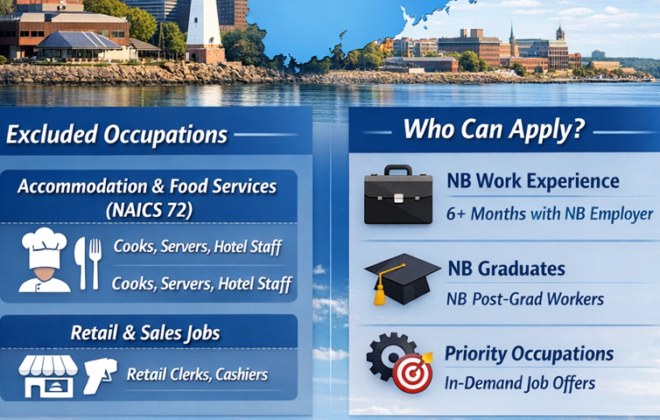
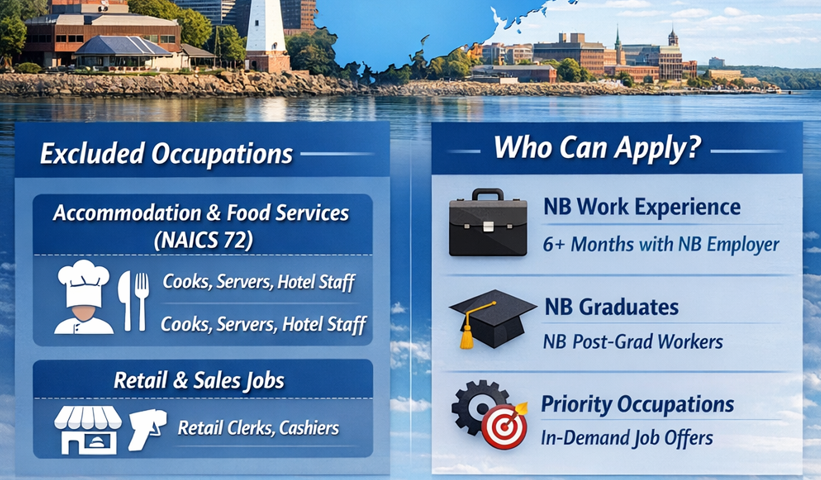
- Restrictions on accommodation and food services sector occupations
- New limitations on specific NOC occupations
- Changes to the Atlantic Immigration Program (AIP) processing model
- More targeted invitation rounds based on labour market priorities
What This Means for Applicants
Candidates in Healthcare, Education, or Construction
Applicants working in these sectors may continue to receive invitations under the New Brunswick Experience pathway, provided they meet all other eligibility requirements.
Recent draws already show a strong focus on these occupations. For example, recent New Brunswick invitation rounds targeted healthcare and construction-related occupations specifically.
Candidates Outside These Sectors
Applicants working in other occupations may face significant delays or may not receive invitations under this pathway while the restriction remains in place.
This is particularly important for candidates in sectors such as:
- Hospitality
- Food services
- Retail
- Certain low-priority occupations previously affected by February 2026 restrictions
Strategic Considerations for Temporary Foreign Workers
For many temporary foreign workers currently living and working in New Brunswick, this update highlights the increasing importance of:
- Choosing occupations aligned with provincial priorities
- Maintaining valid temporary status in Canada
- Exploring alternative immigration pathways early
- Reviewing employer support and long-term immigration planning
As provinces across Canada continue to receive limited nomination allocations from the federal government, many immigration programs are becoming more occupation-focused and sector-driven.
Atlantic Summit’s Perspective
At Atlantic Summit Immigration Consulting Inc., we are seeing a clear trend across Atlantic Canada toward highly targeted immigration selection.
New Brunswick is now prioritizing sectors that directly address critical labour shortages, particularly in healthcare and skilled trades. Candidates and employers should carefully review their immigration strategies to ensure they remain aligned with current provincial priorities.
Individuals currently working outside these sectors may still have alternative pathways available, including:
- Atlantic Immigration Program (AIP)
- Employer-driven LMIA pathways
- Express Entry options
- Other provincial nominee programs
Because immigration priorities are changing rapidly in 2026, early planning has become increasingly important.